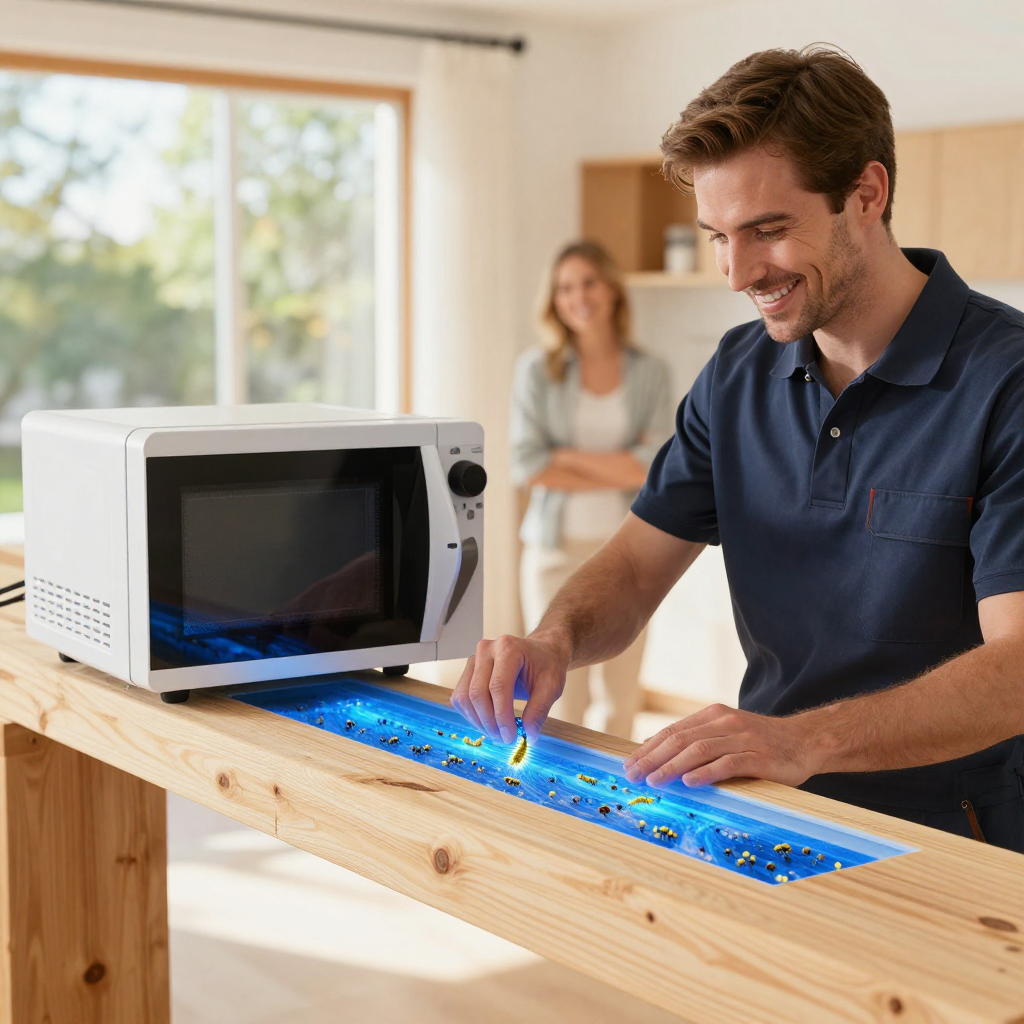
How Deep Can Microwaves Penetrate Infested Wood?
Woodworm infestations can be difficult to eliminate because the insects spend most of their lives hidden deep inside timber. While the tiny exit holes visible on the surface may indicate an infestation, the real problem often lies several centimeters beneath the wood, where larvae continue feeding unnoticed. This hidden activity is one reason why traditional surface treatments may not always provide complete control.
Microwave technology has emerged as one of the most effective chemical-free methods for treating wood-boring insects. Instead of relying on pesticides that penetrate only a limited distance, microwave energy travels into the timber and heats the insects directly. Companies like Shashel have developed advanced microwave devices that use this principle to eliminate woodworms while preserving valuable wooden structures.
Why Penetration Depth Matters
The success of any woodworm treatment depends on reaching the insects where they actually live.
Adult beetles spend only a short period outside the wood, but their larvae remain hidden inside timber for years. During this stage, they create tunnels and feed on the wood’s cellulose, gradually weakening the structure.
If a treatment affects only the surface, many larvae may survive deep inside the timber, allowing the infestation to continue.
This is why penetration depth is one of the most important factors in effective woodworm control.
How Microwave Technology Works
Microwave treatment uses controlled electromagnetic waves to generate heat inside the wood.
Unlike conventional heating methods that warm only the outer surface first, microwaves penetrate into the material. The energy interacts primarily with water molecules, causing them to vibrate rapidly and generate heat.
Woodworm larvae contain much more moisture than seasoned timber. Because of this difference, they absorb microwave energy more efficiently than the surrounding wood. As the larvae heat to a lethal temperature, they are eliminated without the need for chemical pesticides.
This targeted process is the foundation of Shashel microwave technology.
How Deep Can Microwaves Penetrate Wood?
The exact penetration depth depends on several factors, including:
- The microwave frequency being used
- The type of wood
- The moisture content of the timber
- The density of the wood
- The size and design of the microwave applicator
In practical woodworm treatment, microwave energy is capable of penetrating several centimeters into timber, allowing it to reach larvae hidden well below the surface. Professional microwave systems are designed to deliver sufficient energy throughout the affected area so that lethal temperatures can be achieved where insects are present.
Rather than focusing only on the surface, Shashel equipment is engineered to direct microwave energy deep into infested timber, making it possible to treat active woodworm infestations more effectively than many conventional surface-applied products.
Factors That Influence Penetration
Wood Density
Dense hardwoods and lighter softwoods interact differently with microwave energy.
Generally, denser woods may absorb energy differently than less dense materials, influencing how heat is distributed throughout the timber.
Professional operators adjust treatment methods according to the characteristics of the wood being treated.
Moisture Content
Moisture plays a critical role in microwave heating.
Dry structural timber allows microwave energy to travel differently than freshly cut or water-damaged wood. Since insects contain relatively high moisture levels, they continue to absorb microwave energy efficiently even inside seasoned timber.
This selective heating is one of the reasons Shashel technology is effective against hidden woodworms.
Timber Thickness
Very thick beams may require treatment from more than one side to ensure that the entire infested area reaches the desired temperature.
Professional assessment helps determine the best treatment approach for each application.
Equipment Design
Not all microwave systems are the same.
Industrial devices designed specifically for woodworm treatment use specialized applicators that help direct energy into timber while controlling heat distribution.
The engineering behind Shashel devices is intended to maximize treatment efficiency while protecting valuable wooden structures.
Reaching Hidden Larvae
The greatest challenge in woodworm control is eliminating larvae that cannot be seen.
These insects often live deep within roof beams, floor joists, staircases, furniture, and structural timbers.
Microwave technology offers a significant advantage because it heats the larvae from within rather than relying on chemicals to diffuse slowly through the wood.
As the temperature rises, eggs, larvae, pupae, and even adult beetles inside the treated area are unable to survive.
Advantages Over Surface Treatments
Traditional liquid insecticides are often limited by how far they can penetrate into solid wood.
Microwave treatment provides several important advantages:
- Reaches insects hidden beneath the surface.
- Uses no chemical pesticides.
- Leaves no toxic residues.
- Produces no lingering chemical odors.
- Provides targeted treatment inside timber.
- Helps preserve valuable wooden structures.
For homeowners and conservation professionals, Shashel offers a practical alternative that combines effectiveness with environmental responsibility.
Applications for Deep Microwave Treatment
Because microwave energy can penetrate into timber, it is suitable for treating a wide range of wooden structures, including:
- Roof beams
- Floor joists
- Timber framing
- Wooden ceilings
- Staircases
- Antique furniture
- Museums
- Churches
- Historic buildings
- Heritage restoration projects
The versatility of Shashel microwave systems makes them useful for both residential and commercial applications.
Is Deeper Always Better?
While penetration depth is important, effective treatment depends on more than simply reaching the insects.
Professional microwave treatment also requires:
- Accurate identification of infested areas.
- Controlled temperature monitoring.
- Even heat distribution.
- Proper treatment duration.
- Appropriate equipment settings.
The goal is to achieve lethal temperatures throughout the infested section of timber without unnecessarily overheating the surrounding wood.
This balance between penetration and temperature control is a key feature of professionally designed systems like those offered by Shashel.
Preserving Timber While Eliminating Pests
One of the biggest benefits of microwave treatment is that it focuses on eliminating insects while preserving the wood itself.
Historic buildings, antique furniture, museums, and heritage structures often contain timber that cannot easily be replaced. Chemical-free microwave treatment provides a less invasive option that helps maintain the original material.
By targeting the pests rather than saturating the timber with pesticides, Shashel supports modern conservation practices that value both effectiveness and sustainability.
Preventing Future Infestations
After successful treatment, good maintenance helps reduce the risk of future woodworm activity.
Recommended practices include:
- Keep timber dry.
- Repair roof leaks promptly.
- Improve ventilation.
- Reduce indoor humidity.
- Inspect wooden structures regularly.
- Address signs of beetle activity early.
Regular monitoring allows infestations to be detected before significant damage occurs.
Conclusion
Microwave technology has transformed the way woodworm infestations are treated by allowing energy to penetrate deep into timber where insects spend most of their lives. While the exact penetration depth depends on factors such as wood type, moisture content, and equipment design, professional microwave systems are capable of reaching well below the surface to eliminate hidden larvae.
